
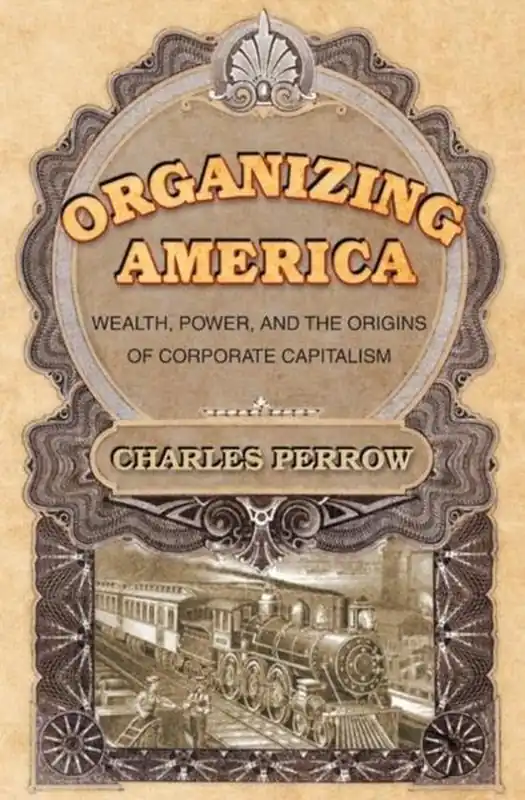

Titel: Organizing America – Wealth, Power, and the Origins of Corporate Capitalism
Schrijver: Charles Perrow
Bindingswijze: Paperback
EAN: 9780691123158
Conditie: Goed
Staat van dit boek
Elk boek is handmatig gecontroleerd. Vragen? Stuur gerust een bericht.
Condities
Als nieuw Zo goed als nieuw, geen tot vrijwel geen gebruikssporen.
Goed Lichte gebruikssporen mogelijk, meestal geen aantekeningen.
Redelijk Zichtbaar gebruikt, kan sporen of aantekeningen bevatten.
Nieuw Ongelezen en in nieuwe staat.
Beschrijving:
Shows that there was nothing inevitable about the surge in corporate size and power by century’s end. This book concludes that the driving force of our history is not technology, politics, or culture, but large, bureaucratic organizations. It features various vignettes and offers insights presaging a different historical genre.
American society today is shaped not nearly as much by vast open spaces as it is by vast, bureaucratic organizations. Over half the working population toils away at enterprises with 500 or more employees–up from zero percent in 1800. Is this institutional immensity the logical outcome of technological forces in an all-efficient market, as some have argued? In this book, the first organizational history of nineteenth-century America, Yale sociologist Charles Perrow says no. He shows that there was nothing inevitable about the surge in corporate size and power by century’s end. Critics railed against the nationalizing of the economy, against corporations’ monopoly powers, political subversion, environmental destruction, and “wage slavery.” How did a nation committed to individual freedom, family firms, public goods, and decentralized power become transformed in one century? Bountiful resources, a mass market, and the industrial revolution gave entrepreneurs broad scope. In Europe, the state and the church kept private organizations small and required consideration of the public good. In America, the courts and business-steeped legislators removed regulatory constraints over the century, centralizing industry and privatizing the railroads. Despite resistance, the corporate form became the model for the next century. Bureaucratic structure spread to government and the nonprofits. Writing in the tradition of Max Weber, Perrow concludes that the driving force of our history is not technology, politics, or culture, but large, bureaucratic organizations. Perrow, the author of award-winning books on organizations, employs his witty, trenchant, and graceful style here to maximum effect. Colorful vignettes abound: today’s headlines echo past battles for unchecked organizational freedom; socially responsible alternatives that were tried are explored along with the historical contingencies that sent us down one road rather than another. No other book takes the role of organizations in America’s development as seriously. The resultant insights presage a new historical genre.