
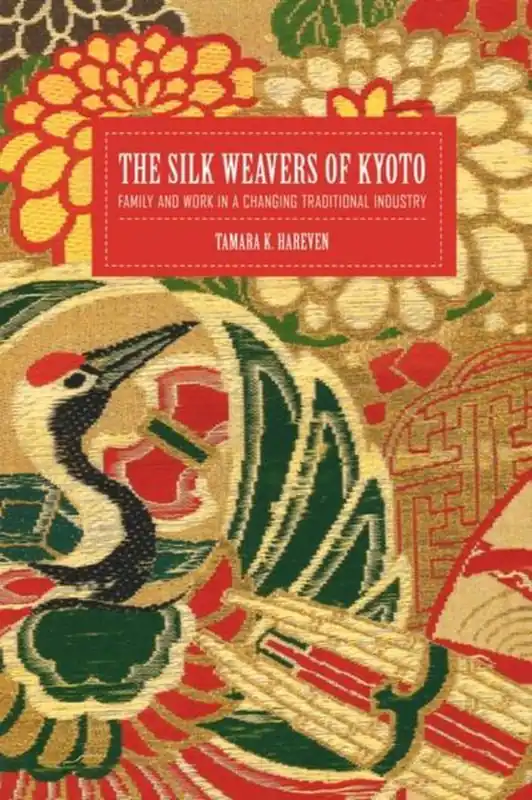

Titel: The Silk Weavers of Kyoto – Family & Work in Changing Traditional Industry
Schrijver: Tamara Hareven
Bindingswijze: Paperback
EAN: 9780520228184
Conditie: Goed
Staat van dit boek
Elk boek is handmatig gecontroleerd. Vragen? Stuur gerust een bericht.
Condities
Als nieuw Zo goed als nieuw, geen tot vrijwel geen gebruikssporen.
Goed Lichte gebruikssporen mogelijk, meestal geen aantekeningen.
Redelijk Zichtbaar gebruikt, kan sporen of aantekeningen bevatten.
Nieuw Ongelezen en in nieuwe staat.
Beschrijving:
The makers of obi, the elegant and costly sash worn over kimono in Japan, belong to an endangered species. Tamara Hareven integrates historical research with intensive life history interviews to reveal the relationships among family, work, and community in this highly specialized occupation.
“Hareven vividly and persuasively describes the family-based silk weaving industry in Kyoto, which has been in the process of change since the end of the nineteenth century. She throws light on the innermost layer of Japanese human relations and therefore the Japanese way of feeling, thinking and evaluation, to an extent that few existing Japanese studies have attained.”—Kiyomi Morioka, Chiba University, Japan
The makers of obi, the elegant and costly sash worn over kimono in Japan, belong to an endangered species. These families of manufacturers, weavers, and other craftspeople centered in the Nishijin weaving district of Kyoto have practiced their demanding craft for generations. In recent decades, however, as a result of declining markets for kimono, they find their livelihood and pride harder to sustain. This book is a poignant exploration of a vanishing world. Tamara Hareven integrates historical research with intensive life history interviews to reveal the relationships among family, work, and community in this highly specialized occupation. Hareven uses her knowledge of textile workers’ lives in the United States and Western Europe to show how striking similarities in weavers’ experiences transcend cultural differences. These very rich personal testimonies, taken over a decade and a half, provide insight into how these men and women have juggled family and work roles and coped with insecurities. Readers can learn firsthand how weavers perceive their craft and how they interpret their lives and view the world around them. With rare immediacy, The Silk Weavers of Kyoto captures a way of life that is rapidly disappearing.