
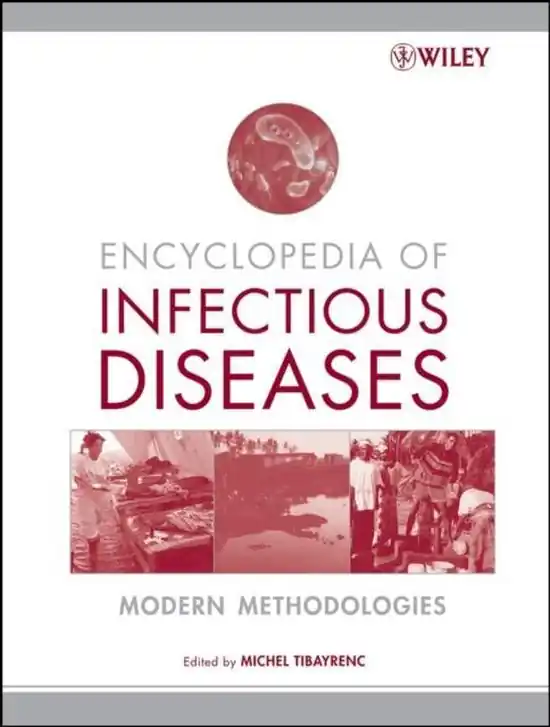

Titel: Encyclopedia of Infectious Diseases
Schrijver: Tibayrenc, Michel
Bindingswijze: Hardcover
EAN: 9780471657323
Conditie: Goed
Staat van dit boek
Elk boek is handmatig gecontroleerd. Vragen? Stuur gerust een bericht.
Condities
Als nieuw Zo goed als nieuw, geen tot vrijwel geen gebruikssporen.
Goed Lichte gebruikssporen mogelijk, meestal geen aantekeningen.
Redelijk Zichtbaar gebruikt, kan sporen of aantekeningen bevatten.
Nieuw Ongelezen en in nieuwe staat.
Beschrijving:
Discover how the application of novel multidisciplinary, integrative approaches and technologies are dramatically changing our understanding of the pathogenesis of infectious diseases and their treatments. Each article presents the state of the science, with a strong emphasis on new and emerging medical applications.
New multidisciplinary approaches that are changing our understanding of infectious diseases
Discover how the application of novel multidisciplinary, integrative approaches and technologies are dramatically changing our understanding of the pathogenesis of infectious diseases and their treatments. Each article presents the state of the science, with a strong emphasis on new and emerging medical applications.
The Encyclopedia of Infectious Diseases is organized into five parts. The first part examines current threats such as AIDS, malaria, SARS, and influenza. The second part addresses the evolution of pathogens and the relationship between human genetic diversity and the spread of infectious diseases. The next two parts highlight the most promising uses of molecular identification, vector control, satellite detection, surveillance, modeling, and high-throughput technologies. The final part explores specialized topics of current concern, including bioterrorism, world market and infectious diseases, and antibiotics for public health.
Each article is written by one or more leading experts in the field of infectious diseases. These experts place all the latest findings from various disciplines in context, helping readers understand what is currently known, what the next generation of breakthroughs is likely to be, and where more research is needed. Several features facilitate research and deepen readers’ understanding of infectious diseases:
- Illustrations help readers understand the pathogenesis and diagnosis of infectious diseases
-
Lists of Web resources serve as a gateway to important research centers, government agencies, and other sources of information from around the world
-
Information boxes highlight basic principles and specialized terminology
-
International contributions offer perspectives on how infectious diseases are viewed by different cultures
-
A special chapter discusses the representation of infectious diseases in art
With its multidisciplinary approach, this encyclopedia helps point researchers in new promising directions and helps health professionals better understand the nature and treatment of infectious diseases.
Discover how the application of novel multidisciplinary, integrative approaches and technologies are dramatically changing our understanding of the pathogenesis of infectious diseases and their treatments. Each article presents the state of the science, with a strong emphasis on new and emerging medical applications.
The Encyclopedia of Infectious Diseases is organized into five parts. The first part examines current threats such as AIDS, malaria, SARS, and influenza. The second part addresses the evolution of pathogens and the relationship between human genetic diversity and the spread of infectious diseases. The next two parts highlight the most promising uses of molecular identification, vector control, satellite detection, surveillance, modeling, and high-throughput technologies. The final part explores specialized topics of current concern, including bioterrorism, world market and infectious diseases, and antibiotics for public health.
Each article is written by one or more leading experts in the field of infectious diseases. These experts place all the latest findings from various disciplines in context, helping readers understand what is currently known, what the next generation of breakthroughs is likely to be, and where more research is needed. Several features facilitate research and deepen readers’ understanding of infectious diseases:
- Illustrations help readers understand the pathogenesis and diagnosis of infectious diseases
-
Lists of Web resources serve as a gateway to important research centers, government agencies, and other sources of information from around the world
-
Information boxes highlight basic principles and specialized terminology
-
International contributions offer perspectives on how infectious diseases are viewed by different cultures
-
A special chapter discusses the representation of infectious diseases in art
With its multidisciplinary approach, this encyclopedia helps point researchers in new promising directions and helps health professionals better understand the nature and treatment of infectious diseases.