
An architect’s defense of drawing as a way of thinking, even in an age of electronic media.
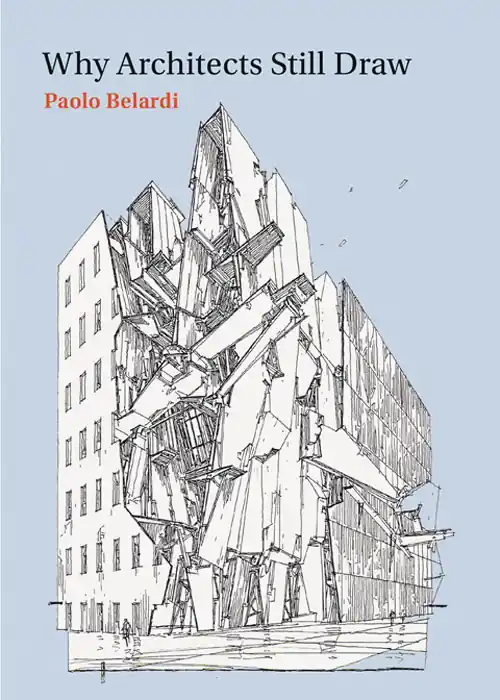
Why would an architect reach for a pencil when drawing software and AutoCAD are a click away? Use a ruler when 3D-scanners and GPS devices are close at hand? In teh publication Why Architects Still Draw, Paolo Belardi offers an elegant and ardent defense of drawing by hand as a way of thinking. Belardi is no Luddite, he doesn’t urge architects to give up digital devices for watercolors and a measuring tape. Rather, he makes a case for drawing as the interface between the idea and the work itself.
A drawing, Belardi argues, holds within it the entire final design. It is the paradox of the acorn: a project emerges from a drawing – even from a sketch, rough and inchoate – just as an oak tree emerges from an acorn. Citing examples not just from architecture but also from literature, chemistry, music, archaeology, and art, Belardi shows how drawing is not a passive recording but a moment of invention pregnant with creative possibilities.
Moving from the sketch to the survey, Belardi explores the meaning of measurement in a digital era. A survey of a site should go beyond width, height, and depth; it must include two more dimensions: history and culture. Belardi shows the sterility of techniques that value metric exactitude over cultural appropriateness, arguing for an &linformed drawing” that takes into consideration more than meters or feet, stone or steel. Even in the age of electronic media, Belardi writes, drawing can maintain its role as a cornerstone of architecture.