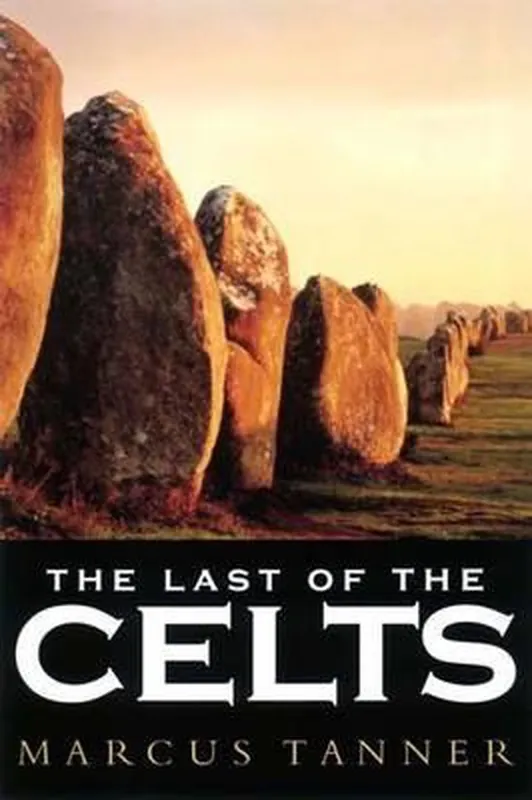

Titel: The Last of the Celts
Schrijver: Marcus Tanner
Bindingswijze: Hardcover
EAN: 9780300104646
Conditie: Goed
Staat van dit boek
Elk boek is handmatig gecontroleerd. Vragen? Stuur gerust een bericht.
Condities
Als nieuw Zo goed als nieuw, geen tot vrijwel geen gebruikssporen.
Goed Lichte gebruikssporen mogelijk, meestal geen aantekeningen.
Redelijk Zichtbaar gebruikt, kan sporen of aantekeningen bevatten.
Nieuw Ongelezen en in nieuwe staat.
Beschrijving:
A cultural tour spanning the Celtic world from the Outer Hebrides of Scotland to Brittany, and from Cape Breton to Patagonia, this book sets out to find out what has happened to the Celtic peoples in a world where pressure to conform to Anglo-American culture has grown ever stronger. Taking the form of a journey that starts in the wilds of north-west Scotland, before proceeding through western Wales, the Isle of Man, troubled Northern Ireland, the western seaboard of the Irish Republic and The French region of Brittany, the author weaves solid historical research into the language, religion, music and customs of the peoples concerned with first-hand encounters with a host of priests, ministers, government officials, cultural activists, musicians and writers. The author finds talk of a Celtic revival much misplaced, for while the term Celtic is banded around as never more, largely to suit the needs of commerce and tourism, the fragile cultures the word actually refers to in the north-west of Britain, Ireland and France are closer than ever before to extinction. As the author discovers on his journey, the tide is going out at different speeds in different places. While Welsh culture and language are (relatively) robust, the rich culture of the Bretons is heading for almost certain oblivion in a decade or two at most, as relentless, centuries-long pressure to be French reaches its climax. Nor are the prospects much brighter for the small Celtic communities in the New World. As the author travels from Cape Breton in Canada to Patagonia in Argentina, he finds the once sturdy communities of Gaelic and Welsh speakers facing exactly the same threats of assimilation and ultimate disappearance. It is a development that impoverishes as all.