
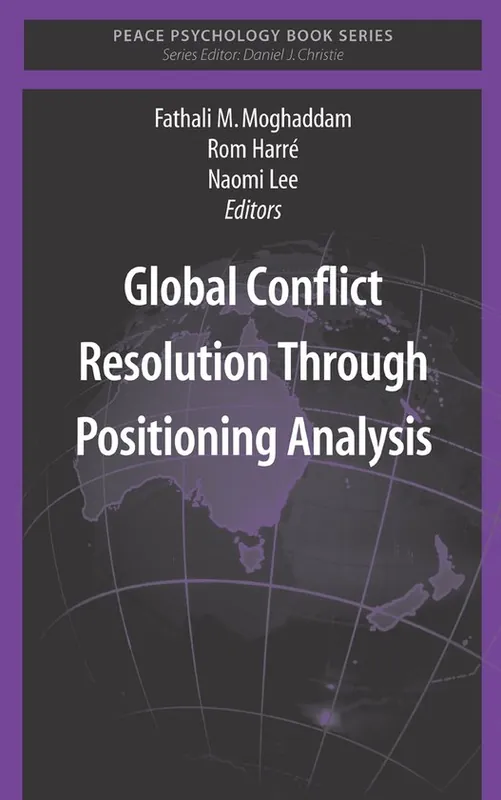

Titel: Global Conflict Resolution Through Positioning Analysis
Schrijver: Fathali M. Moghaddam
Bindingswijze: Hardcover
EAN: 9780387721118
Conditie: Goed
Staat van dit boek
Elk boek is handmatig gecontroleerd. Vragen? Stuur gerust een bericht.
Condities
Als nieuw Zo goed als nieuw, geen tot vrijwel geen gebruikssporen.
Goed Lichte gebruikssporen mogelijk, meestal geen aantekeningen.
Redelijk Zichtbaar gebruikt, kan sporen of aantekeningen bevatten.
Nieuw Ongelezen en in nieuwe staat.
Beschrijving:
With this theory, researchers are able to examine the dynamic flow of social interaction as well as give equal weight to the role of discourse and the psychological resolution of conflict.
This volume applies positioning theory in order to achieve a fuller and more in-depth understanding of conflict and its psychological resolution.
Positioning analysis penetrates beneath surface issues to their underlying psychological causes and social effects, with the intention of defusing conflict and preventing existing conflict from escalating. As the growing literature shows, positioning analysis methods are not only effective in interpersonal and intergroup problems, but have considerable potential for resolving disputes on the world stage. Global Conflict Resolution through Positioning Analysis starts with the daily disputes that result from our multiple social identities and evolving self-definitions, offers a new framework for understanding historical conflict, and brings vital new perspectives to current political and ideological battles. Twenty expert contributors examine scenarios as simple as a committee meeting of four people, as complicated as centuries-old social movements and the shifting tensions in the Middle East.
- Who speaks for Terri Schiavo?: a study in mutual hostility.
- Lawrence and Napoleon: military positioning, in victory and defeat.
- For and/or against one’s best interests?: a minority paradox.
- “Not the person I used to know”: positioning in a case of dementia.
- Rwanda: the view from both sides of genocide.
- The nuclear edge: positioning by Iran, the European Union, and the U.S.
Its scope of coverage and depth of vision make Global Conflict Resolution through Positioning Analysis a reference as vital to professionals—negotiators and conflict managers, social and peace psychologists—as to students and researchers studying peace and conflict.
Positioning theory is the study of the nature, formation, influence and ways of change of local systems of rights and duties as shared assumptions about them influence small scale interactions. Evolving from linguistics origins, the theory concerns conventions of speech and action that are labile, contestable, and ephemeral. With this theory, researchers are able to examine the dynamic flow of social interaction as well as give equal weight to the role of discourse and the psychological resolution of conflict.
This volume applies positioning theory in order to achieve a fuller and more in-depth understanding of conflict and its psychological resolution. The editors approach positioning from the micro (interpersonal) level all the way to the macro (intergroup and international) level.