
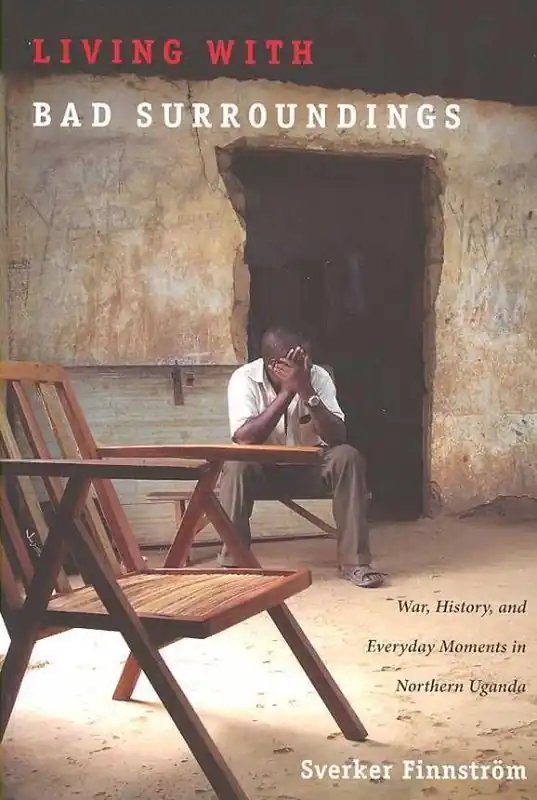

Titel: Living With Bad Surroundings
Schrijver: Sverker Finnstrom
Bindingswijze: Paperback
EAN: 9780822341918
Conditie: Goed
Staat van dit boek
Elk boek is handmatig gecontroleerd. Vragen? Stuur gerust een bericht.
Condities
Als nieuw Zo goed als nieuw, geen tot vrijwel geen gebruikssporen.
Goed Lichte gebruikssporen mogelijk, meestal geen aantekeningen.
Redelijk Zichtbaar gebruikt, kan sporen of aantekeningen bevatten.
Nieuw Ongelezen en in nieuwe staat.
Beschrijving:
An ethnographic examination of how northern Ugandans understand and attempt to control their moral universe and material circumstances in the midst of civil war.
Since 1986, the Acholi people of northern Uganda have lived in the crossfire of a violent civil war, with the Lord’s Resistance Army and other groups fighting the Ugandan government. Acholi have been murdered, maimed, and driven into displacement. Thousands of children have been abducted and forced to fight. Many observers have perceived Acholiland and northern Uganda to be an exception in contemporary Uganda, which has been celebrated by the international community for its increased political stability and particularly for its fight against AIDS. These observers tend to portray the Acholi as war-prone, whether because of religious fanaticism or intractable ethnic hatreds. In Living with Bad Surroundings, Sverker Finnström rejects these characterizations and challenges other simplistic explanations for the violence in northern Uganda. Foregrounding the narratives of individual Acholi, Finnström enables those most affected by the ongoing “dirty war” to explain how they participate in, comprehend, survive, and even resist it.
Finnström draws on fieldwork conducted in northern Uganda between 1997 and 2006 to describe how the Acholi—especially the younger generation, those born into the era of civil strife—understand and attempt to control their moral universe and material circumstances. Structuring his argument around indigenous metaphors and images, notably the Acholi concepts of good and bad surroundings, he vividly renders struggles in war and the related ills of impoverishment, sickness, and marginalization. In this rich ethnography, Finnström provides a clear-eyed assessment of the historical, cultural, and political underpinnings of the civil war while maintaining his focus on Acholi efforts to achieve “good surroundings,” viable futures for themselves and their families.