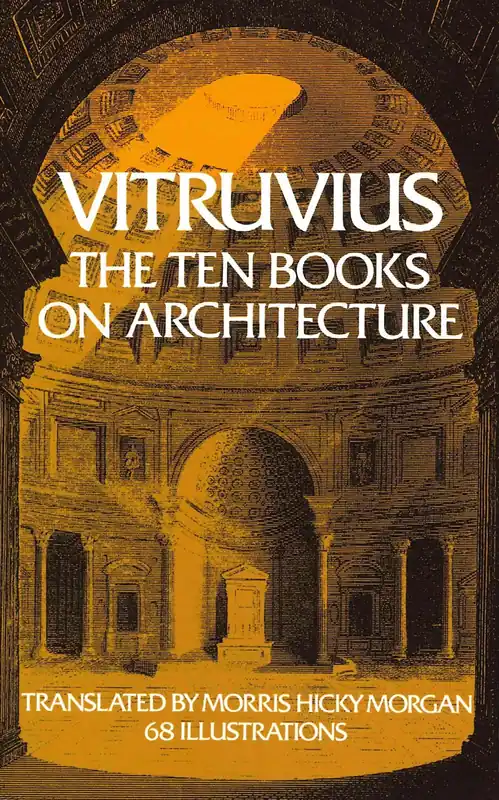

This is the first and most famous text in the history of western landscape architecture, architecture, enginering and town planning. In Roman times the architect was, from the word’s Greek etymology, a ‘chief technician’. The Ten Books’ Contentslist reveals that most aspects of engineering, including harbours, site planning, clocks, aqueducts, pumps and siege engines, come with the author’s technical scope. Only a tiny proportion of these subjects come within the twenty-first century scope of ‘architecture’. Vitruvius Pollio’s treatiseDe Architectura, was written circa 27 BC and is the only book of its kind to survive from antiquity. These online extracts from Vitruvius comprise the first Book and his comments on what we would now classify as garden design.
Ian Thompson re-interpreted Vitruvius for modern landscape architecture in his book onEcology, Community and Delight: sources of value in landcape architecture(1999). He argued thatDelightis still a useful name for the aesthetic aspect of landscape design but that it makes sense to interpretFirmnessasEcologyandCommodityasCommunity.
With regard to the design methods appropriate to landscape architecture, Tom Turner has suggested a ‘simple approach’, also deriving from Vitruvius, based on an understanding of Natural Patterns, Social Patterns, Cultural Patterns and Aesthetic Patterns.
Translated by Morris Hicky Morgan, in 1914, edited by Tom Turner in 2000