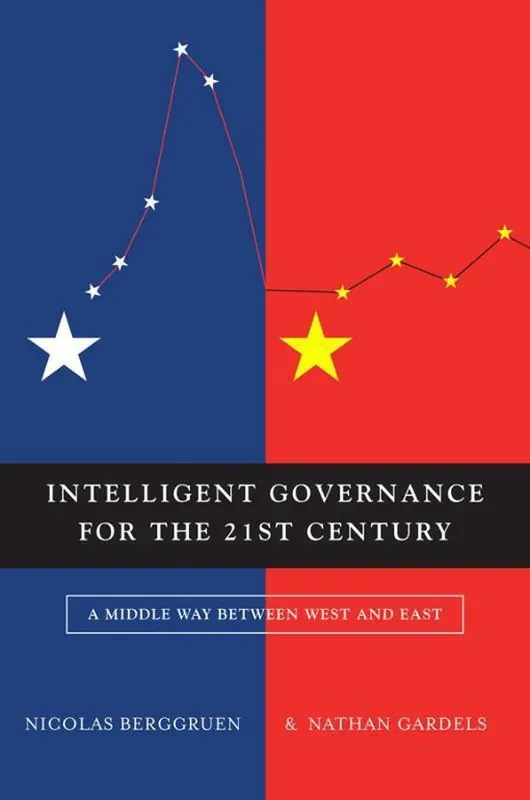

Titel: Intelligent Governance For The 21St Century
Schrijver: Nicolas Berggruen
Bindingswijze: Hardcover
EAN: 9780745659732
Conditie: Goed
Staat van dit boek
Elk boek is handmatig gecontroleerd. Vragen? Stuur gerust een bericht.
Condities
Als nieuw Zo goed als nieuw, geen tot vrijwel geen gebruikssporen.
Goed Lichte gebruikssporen mogelijk, meestal geen aantekeningen.
Redelijk Zichtbaar gebruikt, kan sporen of aantekeningen bevatten.
Nieuw Ongelezen en in nieuwe staat.
Beschrijving:
* A thought-provoking analysis of liberal democracy and argument for a new system of intelligent governance’. * The authors provide a comparative study of the consumer democracies’ of the West and the meteoric rise of China and examine the effects of these systems of governance.
For decades, liberal democracy has been extolled as the best system of governance to have emerged out of the long experience of history. Today, such a confident assertion is far from self-evident. Democracy, in crisis across the West, must prove itself.
In the West today, the authors argue, we no longer live in “industrial democracies,” but “consumer democracies” in which the governing ethos has ended up drowning households and governments in debt and resulted in paralyzing partisanship. In contrast, the long-term focus of the decisive and unified leadership of China is boldly moving its nation into the future. But China also faces challenges arising from its meteoric rise. Its burgeoning middle class will increasingly demand more participation, accountability of government, curbing corruption and the rule of law.
As the 21st Century unfolds, both of these core systems of the global order must contend with the same reality: a genuinely multi-polar world where no single power dominates and in which societies themselves are becoming increasingly diverse. The authors argue that a new system of “intelligent governance” is required to meet these new challenges. To cope, the authors argue that both East and West can benefit by adapting each other’s best practices. Examining this in relation to widely varying political and cultural contexts, the authors quip that while China must lighten up, the US must tighten up.
This highly timely volume is both a conceptual and practical guide of impressive scope to the challenges of good governance as the world continues to undergo profound transformation in the coming decades.