
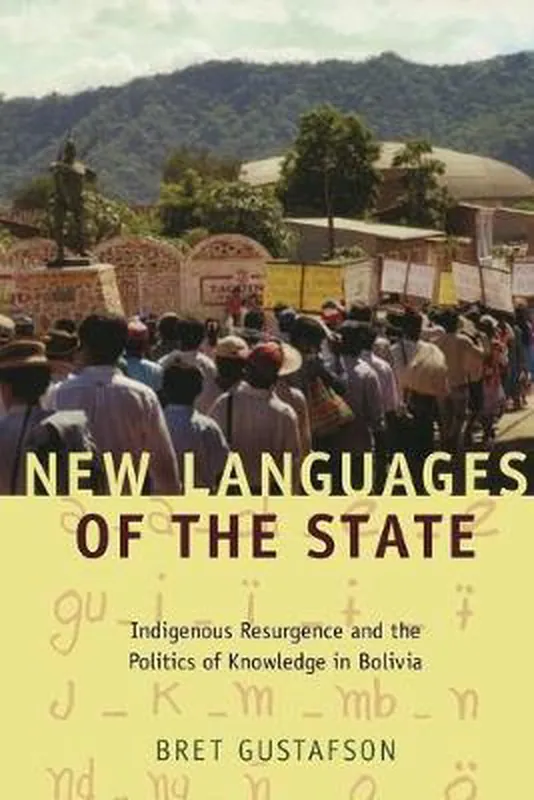

Titel: New Languages of the State
Schrijver: Florencia E. Mallon
Bindingswijze: Paperback
EAN: 9780822345466
Conditie: Goed
Staat van dit boek
Elk boek is handmatig gecontroleerd. Vragen? Stuur gerust een bericht.
Condities
Als nieuw Zo goed als nieuw, geen tot vrijwel geen gebruikssporen.
Goed Lichte gebruikssporen mogelijk, meestal geen aantekeningen.
Redelijk Zichtbaar gebruikt, kan sporen of aantekeningen bevatten.
Nieuw Ongelezen en in nieuwe staat.
Beschrijving:
Analyzes bilingual intercultural education in Bolivia.
During the mid-1990s, a bilingual intercultural education initiative was launched to promote the introduction of indigenous languages alongside Spanish in public elementary schools in Bolivia’s indigenous regions. Bret Gustafson spent fourteen years studying and working in southeastern Bolivia with the Guarani, who were at the vanguard of the movement for bilingual education. Drawing on his collaborative work with indigenous organizations and bilingual-education activists as well as more traditional ethnographic research, Gustafson traces two decades of indigenous resurgence and education politics in Bolivia, from the 1980s through the election of Evo Morales in 2005. Bilingual education was a component of education reform linked to foreign-aid development mandates, and foreign aid workers figure in New Languages of the State, as do teachers and their unions, transnational intellectual networks, and assertive indigenous political and intellectual movements across the Andes.
Gustafson shows that bilingual education is an issue that extends far beyond the classroom. Public schools are at the center of a broader battle over territory, power, and knowledge as indigenous movements across Latin America actively defend their languages and knowledge systems. In attempting to decolonize nation-states, the indigenous movements are challenging deep-rooted colonial racism and neoliberal reforms intended to mold public education to serve the market. Meanwhile, market reformers nominally embrace cultural pluralism while implementing political and economic policies that exacerbate inequality. Juxtaposing Guarani life, language, and activism with intimate portraits of reform politics among academics, bureaucrats, and others in and beyond La Paz, Gustafson illuminates the issues, strategic dilemmas, and imperfect alliances behind bilingual intercultural education.