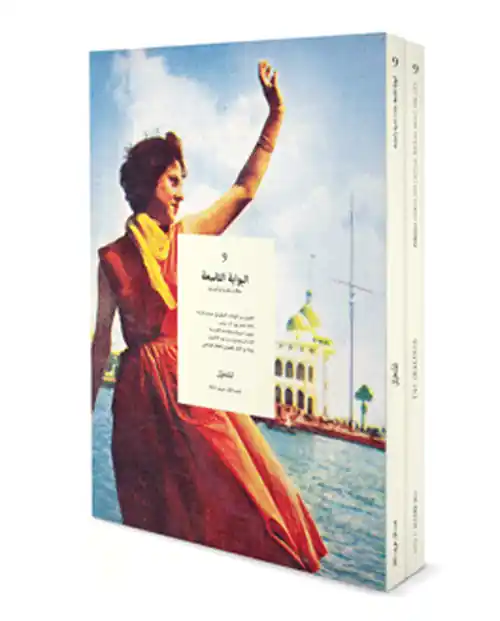

Portal 9 is an imaginary opening into the city, an intensive exploration of the urban condition from architecture and planning to metropolitan mores and cultural pursuits.
As a journal of stories and critical writing about urbanism and the city, Portal 9 blends creative writing, photography, and personal essays with academic scholarship, perceptive journalism, and cultural critiques. Published by Solidere Management Services, the Lebanese Company for the Development and Reconstruction of the Beirut Central District, Portal 9 is issued in Beirut and published twice yearly in English and Arabic editions. Each issue focuses on a unique theme. The journal addresses the need for a conscientious debate about architecture, planning, culture, and society in urban contexts across the Middle East and the rest of the world.
In 1925, Portuguese poet Fernando Pessoa (1888-1935), renowned for his fictional characters, pseudonyms, and unbridled fusion of fiction and reality, wrote a guidebook for his beloved city, titled Lisbon – What the Tourist Should See. The guide was discovered more than fifty years after his death and first published by Livros Horizontes in 1992 in both English and Portuguese. It was updated in 2008 with current spellings of names and places and with archival maps and photography for the tourist to better trace the poet’s path throughout the city, nearly ninety years after the guide was written.
In a journal about the city, place, and urbanism, we call upon and seek inspiration from Pessoa because his body of work stands as a paragon of how to render the city – its places and spaces – a field for unbridled interplay of the imagination. Whereas rural areas and the natural world are often adapted according to the primary needs of biological life and its immediate requirements, the city has long encompassed a range of living that transcends and seeks liberation from the natural world. This urban transcendence, which heightens perception and theoretical inquiry, is embodied in the currents of architecture, lifestyle, and passion, as well as artistic and intellectual movements. For the city, due to its clear distinctions from the natural world, has always stimulated imagination, foresight, and cognition. Thus, the city affirms its urban essence, full of potential.